
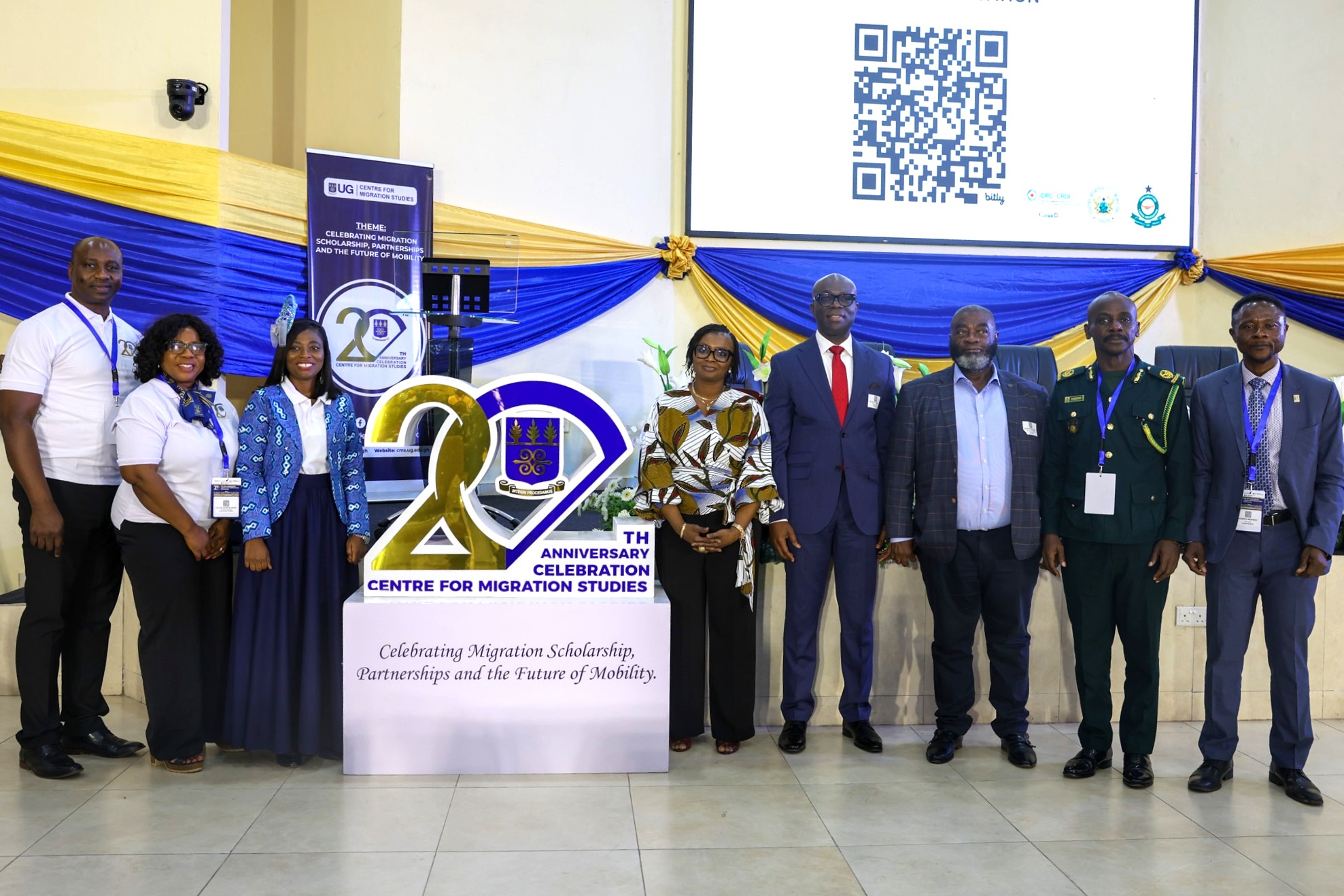
A high-level panel session on the first day of the CMS@20 International Conference on Free Movement in West Africa highlighted the complexities of translating regional free movement norms into practice.
Chaired by Prof. Joseph Mensah, the session brought together a diverse panel of experts from government, academia, international organisations, and the private sector to discuss the governance, economic, legal, and humanitarian dimensions of mobility in West Africa.
The dialogue drew attention to both the achievements and persistent challenges in ensuring that the free movement of persons, goods and services benefits all populations. Panelists reflected on the role of regional institutions, national agencies and legal frameworks in facilitating mobility, while also addressing the real-world barriers faced by labour migrants, students, returnees and border communities.
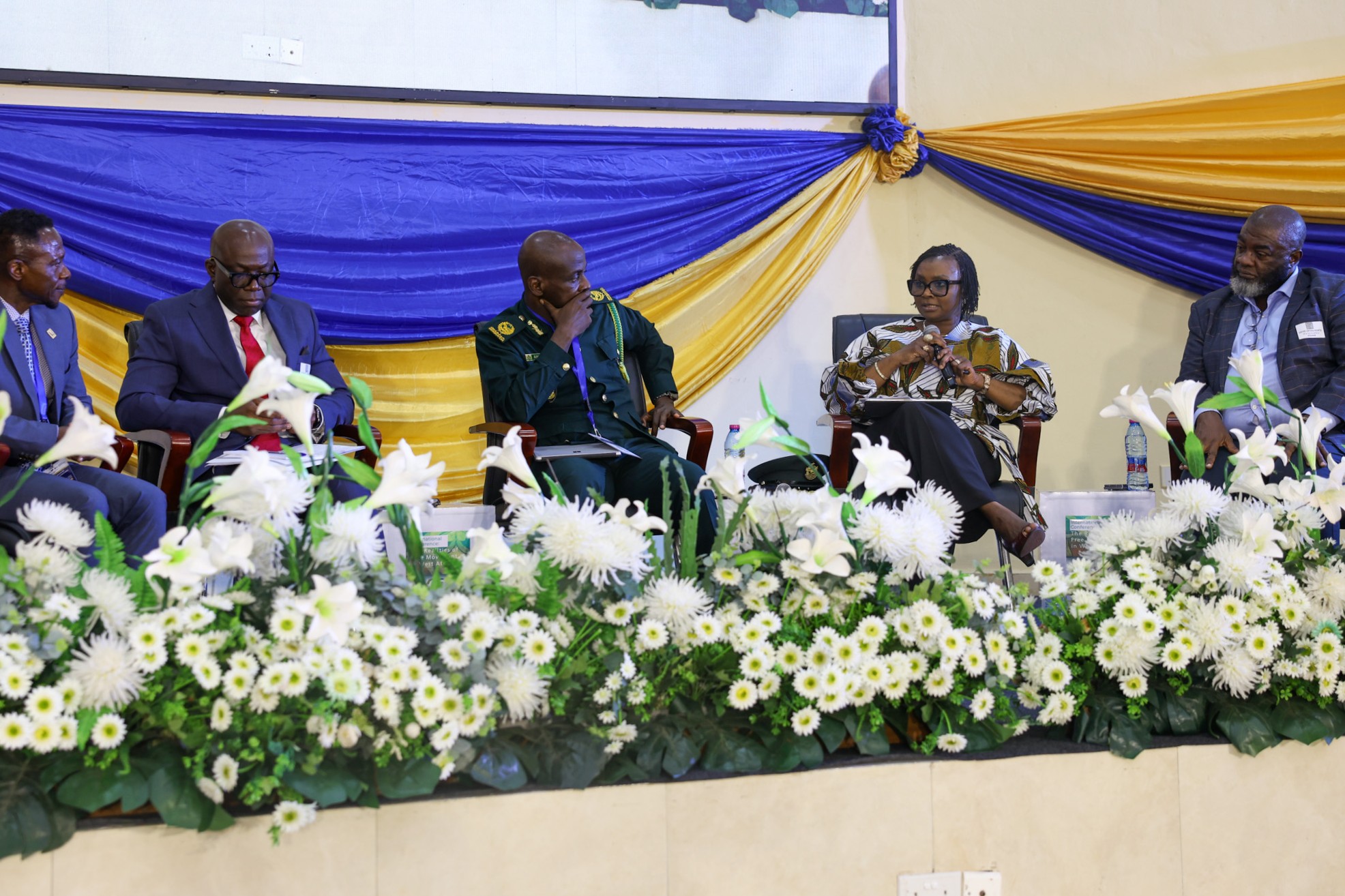
Dr. Providence Mireku, representing the Bank of Ghana, discussed the economic impacts of regional mobility, noting how the free movement of persons, goods, and services contributes to trade, labour markets, and financial flows. He highlighted the critical role of remittances, which over the years have become an important source of foreign exchange and social protection, helping to stabilise households and economies across West Africa.
Speaking from a regulatory perspective, Philip Peter Andoh, Acting Deputy Comptroller-General of Immigration, elaborated on the mandate of the Ghana Immigration Service and how it deploys personnel and resources to manage borders efficiently. He stressed the delicate balance between facilitating legitimate movement and ensuring national security, highlighting the need for coordination, adequate resourcing, and harmonisation of regional migration policies.
In her remarks delivered from an international and humanitarian aspect of free movement, Mrs. Fatou Diallo Ndiaye, Chief of Mission of the IOM for Ghana, Togo, and Benin, reflected on migrants’ lived experiences in the region.
Drawing on her years overseeing humanitarian and migration programmes, she emphasised the importance of people-centred governance, noting that migrants must be seen not only as economic actors but also as rights-holders. Mrs. Ndiaye called for stronger collaboration between states, regional bodies and development partners to make free movement more inclusive and protective.
For his part, legal expert and policy practitioner David Ofosu-Dorte highlighted the connection between mobility regimes, investment, trade, and regional economic integration. He argued that legal clarity, transparent regulatory frameworks, and effective dispute resolution mechanisms are essential for free movement to support economic growth, while also pointing out that inconsistencies between regional protocols and national legislation create uncertainties for both migrants and businesses.
The panel concluded that while free movement remains a core principle of regional integration, realising its full potential requires realistic, coordinated and inclusive policies that engage economic, legal, humanitarian, and security actors alike.
- Log in to post comments