
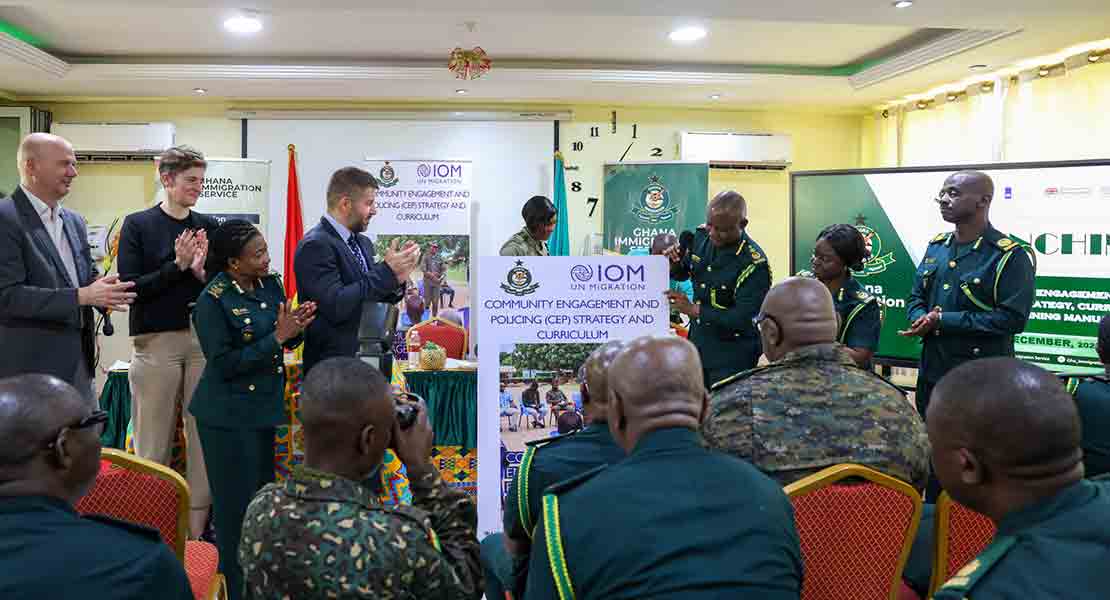
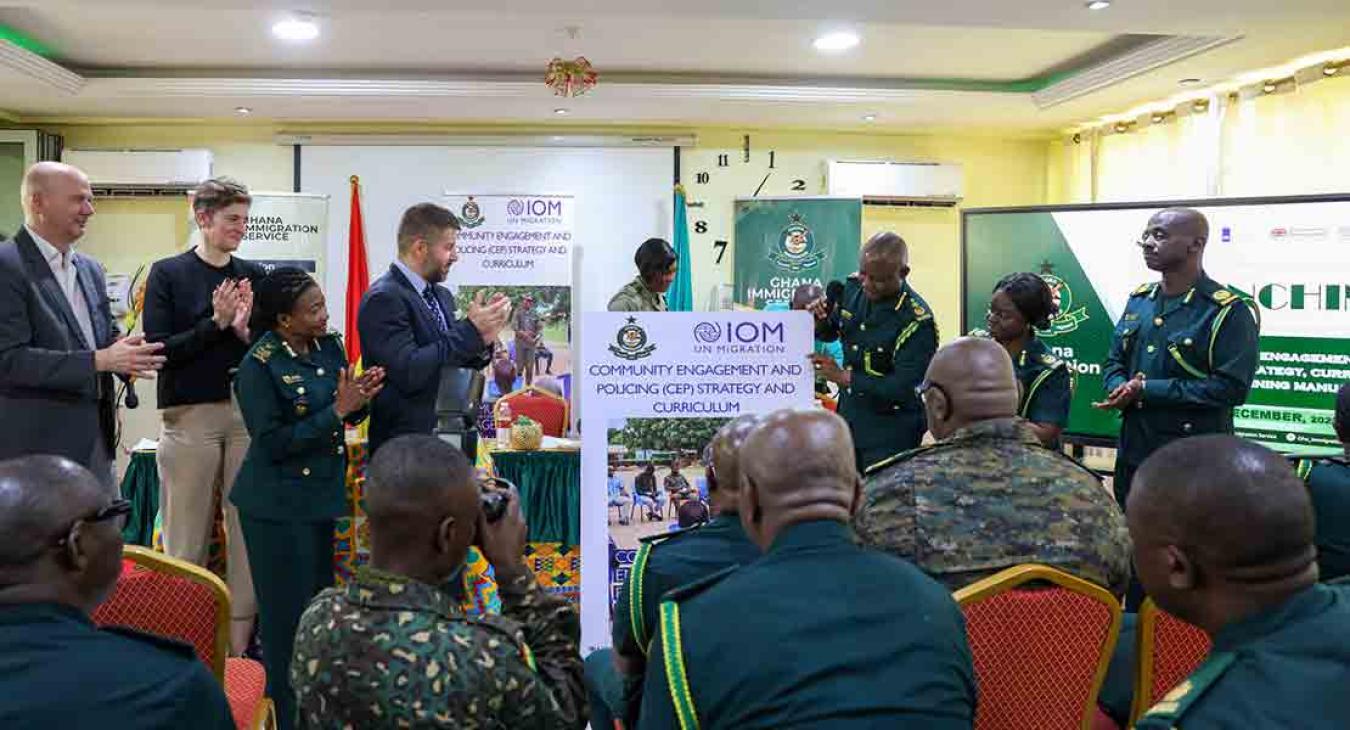
A new Community Engagement and Policing (CEP) Strategy, Curriculum and Training Manual developed to strengthen border security and place communities at the heart of migration governance has been formally launched by the Ghana Immigration Service (GIS).
The launch, which coincided with International Migrants Day 2025, was carried out in collaboration with the International Organization for Migration (IOM), the Ministry of the Interior, and other key partners.
The strategy was developed through a multi-stakeholder consultative process and led by Prof. Mary B. Setrana, IDRC Research Chair on Forced Displacement in Anglophone West Africa and Director of the Centre for Migration Studies (CMS), University of Ghana, with technical support from GIS, IOM, district assemblies, and community representatives.
The CEP Strategy recognises that Ghana’s land borders traverse farmlands, traditional areas, and diverse ethnic communities, making local engagement critical for effective border management. It adopts a people-focused, preventive approach to policing, emphasizing collaboration and trust-building between communities and law enforcement authorities.
Development of the strategy began in 2022 with vulnerability and security perception surveys conducted in eight northern border communities, including Hamile, Tumu, Namoo, Mognori, Pulmakom, Paga, Pusiga, and Kulungugu. The findings from these surveys informed town hall discussions with border officials, community members, and development partners, which generated recommendations such as establishing dialogue platforms, initiating livelihood projects, and addressing legal identity gaps for residents.
Following these consultations, a CEP Technical Working Group was formed within GIS to oversee implementation. Eleven GIS officers were trained as CEP trainers through a Training-of-Trainers workshop, and a CEP Desk was established in the Public Affairs Department to coordinate activities.
The strategy aims to strengthen collaboration between communities and state authorities, protect the safety of migrants and host populations, prevent cross-border crime, and ensure that law enforcement operations respect human rights while promoting accountability. It also focuses on building capacity in communication, mediation, and conflict resolution for both authorities and communities, providing a framework for inclusive, locally-informed border governance.
The expected outcomes of the CEP Strategy include enhanced community participation in border governance, improved public trust in law enforcement agencies, greater awareness among communities of safety and security issues, proactive identification and prevention of security challenges, and support for the sustainable development of border regions. By empowering communities and authorities to work together, the strategy seeks to foster social cohesion, promote human rights, and ensure safer borders that facilitate trade, mobility, and local development.
With the launch of the CEP Strategy, GIS and its partners are set to roll it out nationwide, starting with northern border communities, ensuring a people-centered and rights-based approach to migration and border management across Ghana.
- Log in to post comments