
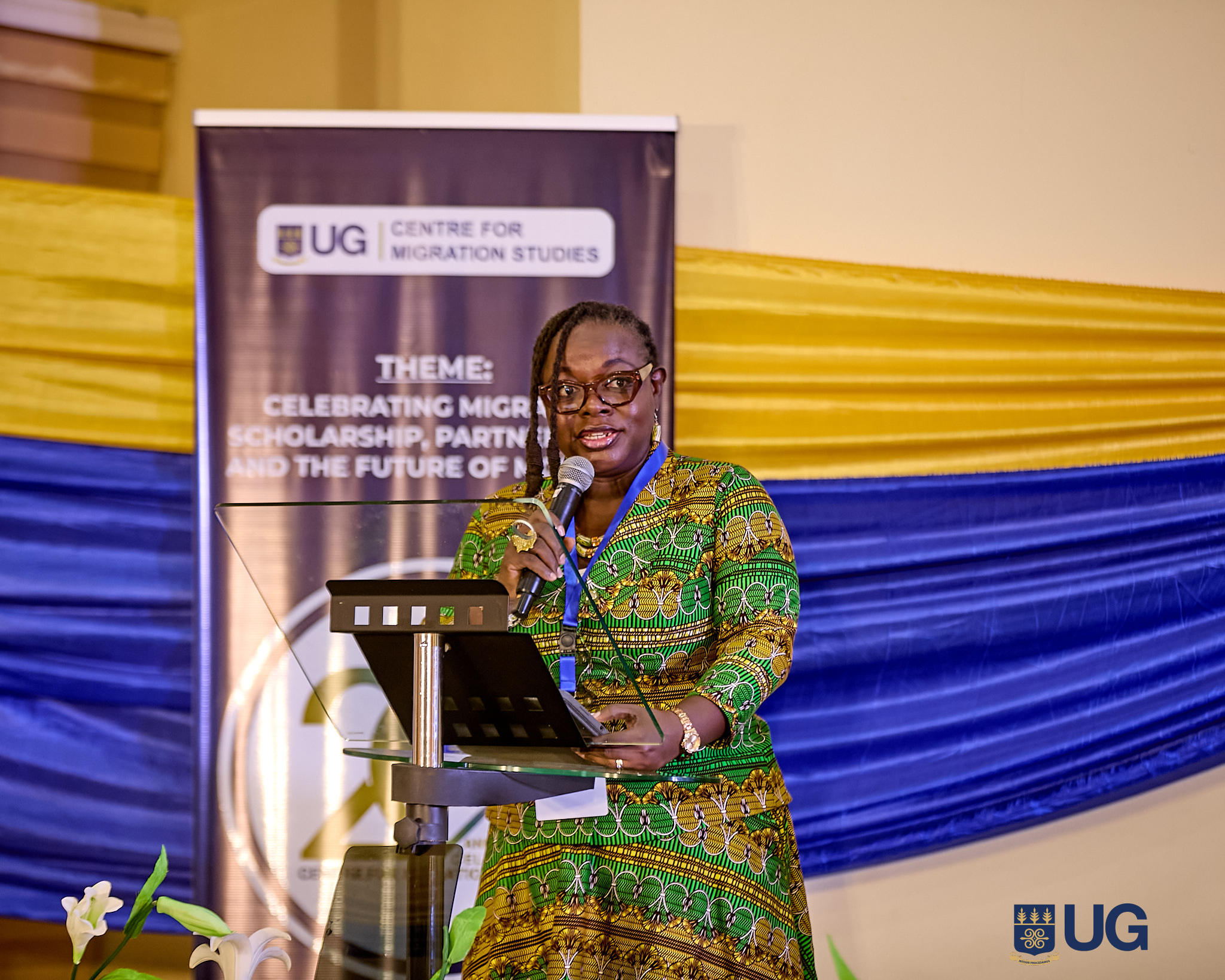
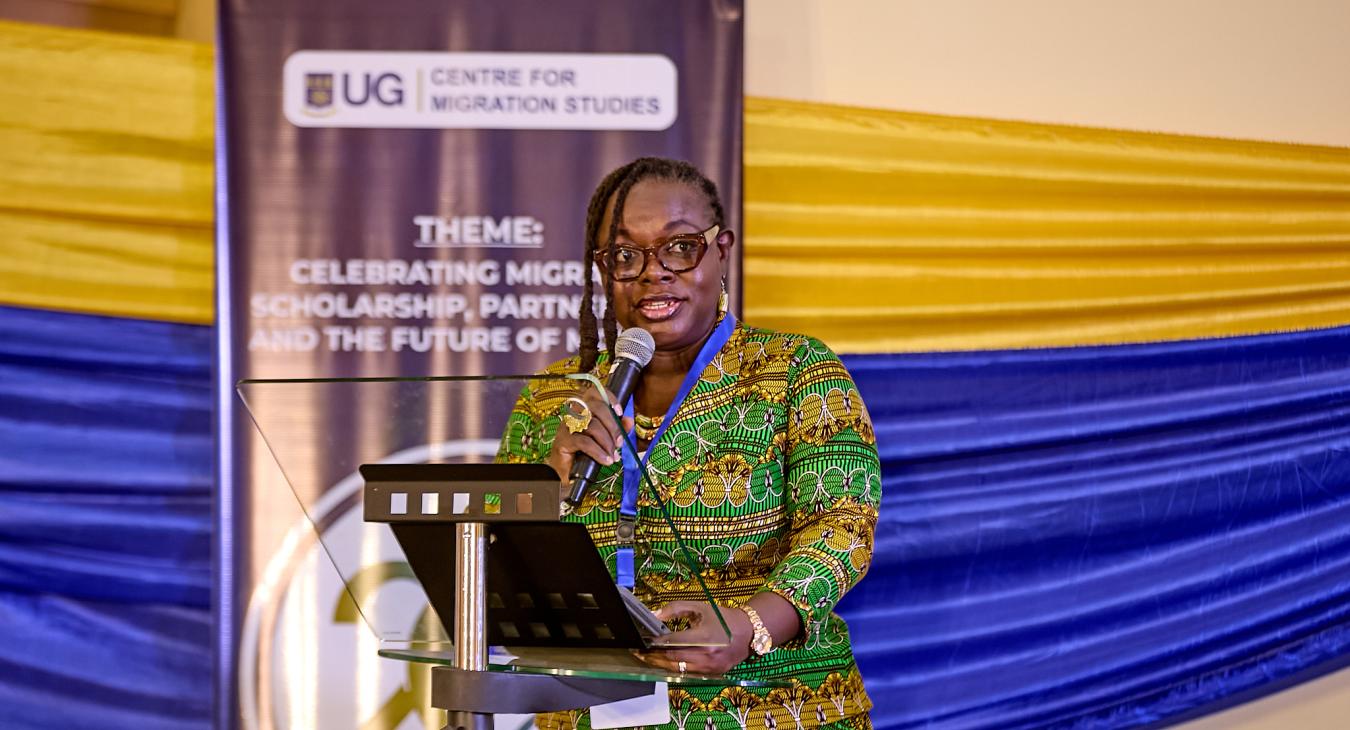
The Vice-Chancellor of the University of Ghana, Prof. Nana Aba Appiah Amfo, has commended the Centre for Migration Studies (CMS) for its two decades of impactful scholarship, postgraduate training, and policy engagement, describing the Centre as a key contributor to the University’s research profile and international visibility.
Prof. Amfo made these remarks while chairing the launch of the year-long 20th Anniversary celebrations of the Centre for Migration Studies and the opening of an International Conference on Movement in Africa at the ISSER Conference Facility.
She noted that, as the only academic centre of its kind in the West African sub-region, CMS has built a strong interdisciplinary tradition in migration studies, drawing expertise from across academic disciplines and producing rigorous research that informs policy, academic debate, and public discourse.
According to the Vice-Chancellor, the Centre’s graduate programmes at the MA, MPhil and PhD levels have trained scholars and practitioners from Ghana and beyond, many of whom now occupy strategic positions in government, international organisations, civil society and academia. She emphasised that these alumni continue to enhance the University of Ghana’s reputation for policy-relevant research and capacity-building.
Prof. Amfo underscored the importance of migration as a field of study, describing it as one of the most enduring human activities shaping societies, economies and cultures across history. She observed that while migration creates opportunities for labour mobility, skills development and regional integration, it also presents complex governance challenges, particularly in the areas of irregular migration, migrant exploitation and unsafe migration routes.
She noted that in West Africa, efforts by national governments and ECOWAS to strengthen free movement and labour mobility frameworks remain critical, but face constraints such as uneven implementation of protocols, restrictive visa regimes, weak border governance and limited access to information. These realities, she said, make sustained research and informed policy dialogue essential.
The Vice-Chancellor described the theme of the anniversary, “Celebrating Migration Scholarship, Partnerships and the Future of Mobility,” as timely, noting that it reflects both the Centre’s legacy and the urgent need for evidence-based approaches to migration governance. She further highlighted the relevance of the accompanying conference theme on free movement in West Africa, pointing to the role of scholarship in shaping norms, policies and social transformation.
Situating CMS’s work within the University of Ghana’s 2024–2029 Strategic Plan, Prof. Amfo noted that the Centre exemplifies the University’s priorities of impactful research, a transformative student experience, and meaningful engagement and partnerships. She explained that CMS’s research agenda, international collaborations, advisory roles and policy contributions demonstrate how scholarship can be translated into practical solutions to societal challenges.
She also highlighted the Centre’s role in delivering a transformative student experience by equipping graduate students with strong research, analytical and policy skills, enabling them to thrive in diverse professional environments locally and internationally.
In her closing remarks, Prof. Amfo expressed encouragement at plans to establish a modern, multipurpose Migration Studies Complex to house the Centre and support its operations. She reaffirmed the University’s commitment to supporting the Centre’s growth and expressed hope that a future CMS anniversary would be celebrated in the auditorium of the proposed complex.
The Vice-Chancellor congratulated the Director of CMS, Prof. Mary Boatemaa Setrana, past Directors, faculty, collaborators, alumni and students for sustaining the Centre’s impact over the past twenty years. She also thanked local and international partners for their continued support, which she said has enabled CMS to contribute meaningfully to national, regional and global migration discourse.
- Log in to post comments